Skip to content Skip to sidebar Skip to footer

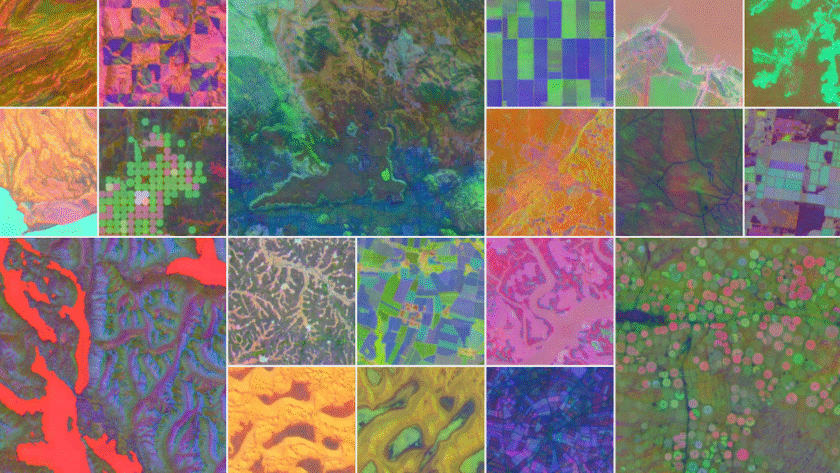
NASA Releases Galileo: The Open-Source Multimodal Model Advancing Earth Observation and Remote Sensing

Introduction Galileo is an open-source, highly multimodal foundation model developed to process, analyze, and understand diverse Earth observation (EO) data streams—including optical, radar, elevation, climate, and auxiliary maps—at scale. Galileo is developed with the support from researchers from McGill University, NASA Harvest Ai2, Carleton University, University of British Columbia, Vector Institute, and Arizona State University.…

Read More

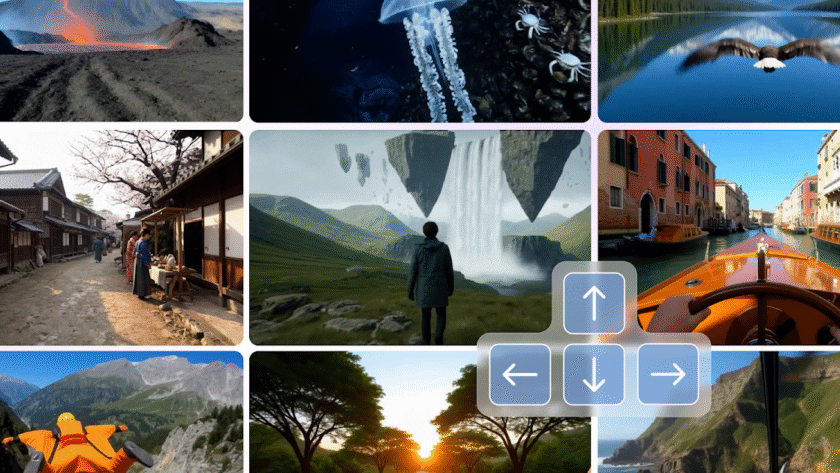
Genie 3: A new frontier for world models

Acknowledgments Genie 3 was made possible due to key research and engineering contributions from Phil Ball, Jakob Bauer, Frank Belletti, Bethanie Brownfield, Ariel Ephrat, Shlomi Fruchter, Agrim Gupta, Kristian Holsheimer, Aleks Holynski, Jiri Hron, Christos Kaplanis, Marjorie Limont, Matt McGill, Yanko Oliveira, Jack Parker-Holder, Frank Perbet, Guy Scully, Jeremy Shar, Stephen Spencer, Omer Tov, Ruben…

Read More

NVIDIA AI Releases GraspGen: A Diffusion-Based Framework for 6-DOF Grasping in Robotics

Robotic grasping is a cornerstone task for automation and manipulation, critical in domains spanning from industrial picking to service and humanoid robotics. Despite decades of research, achieving robust, general-purpose 6-degree-of-freedom (6-DOF) grasping remains a challenging open problem. Recently, NVIDIA unveiled GraspGen, a novel diffusion-based grasp generation framework that promises to bring state-of-the-art (SOTA) performance with unprecedented…

Read More

Apple Researchers Introduce FastVLM: Achieving State-of-the-Art Resolution-Latency-Accuracy Trade-off in Vision Language Models

Vision Language Models (VLMs) allow both text inputs and visual understanding. However, image resolution is crucial for VLM performance for processing text and chart-rich data. Increasing image resolution creates significant challenges. First, pretrained vision encoders often struggle with high-resolution images due to inefficient pretraining requirements. Running inference on high-resolution images increases computational costs and latency…

Read More

NVIDIA AI Presents ThinkAct: Vision-Language-Action Reasoning via Reinforced Visual Latent Planning

Estimated reading time: 5 minutes Introduction Embodied AI agents are increasingly being called upon to interpret complex, multimodal instructions and act robustly in dynamic environments. ThinkAct, presented by researchers from Nvidia and National Taiwan University, offers a breakthrough for vision-language-action (VLA) reasoning, introducing reinforced visual latent planning to bridge high-level multimodal reasoning…

Read More

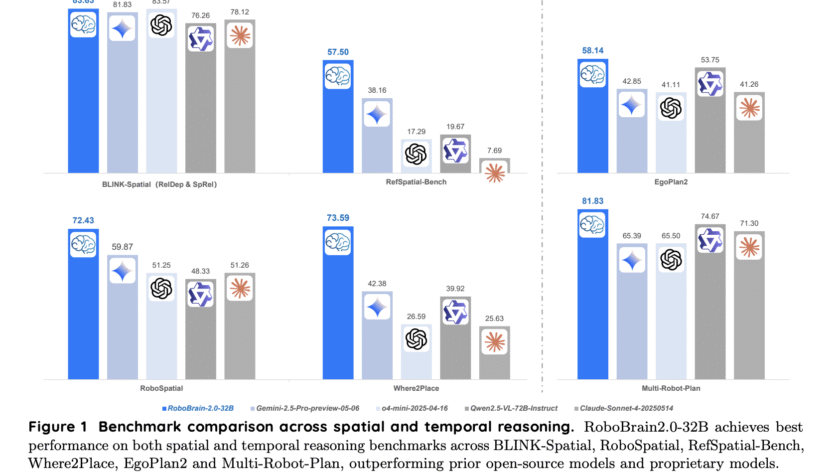
RoboBrain 2.0: The Next-Generation Vision-Language Model Unifying Embodied AI for Advanced Robotics

Advancements in artificial intelligence are rapidly closing the gap between digital reasoning and real-world interaction. At the forefront of this progress is embodied AI—the field focused on enabling robots to perceive, reason, and act effectively in physical environments. As industries look to automate complex spatial and temporal tasks—from household assistance to logistics—having AI systems that…

Read More