Autoregressive visual generation models have emerged as a groundbreaking approach to image synthesis, drawing inspiration from language model token prediction mechanisms. These innovative models utilize image tokenizers to transform visual content into discrete or continuous tokens. The approach facilitates flexible multimodal integrations and allows adaptation of architectural innovations from LLM research. However, the field has…
Last updated March 26 Today we’re introducing Gemini 2.5, our most intelligent AI model. Our first 2.5 release is an experimental version of 2.5 Pro, which is state-of-the-art on a wide range of benchmarks and debuts at #1 on LMArena by a significant margin. Gemini 2.5 models are thinking models, capable of reasoning through their…
Introduction
Writing code is about solving problems, but not every problem is predictable. In the real world, your software will encounter unexpected situations: missing files, invalid user inputs, network timeouts, or even hardware failures. This is why handling errors isn’t just a nice-to-have; it’s a critical part of building robust and reliable applications for production.…
Converting complex documents into structured data has long posed significant challenges in the field of computer science. Traditional approaches, involving ensemble systems or very large foundational models, often encounter substantial hurdles such as difficulty in fine-tuning, generalization issues, hallucinations, and high computational costs. Ensemble systems, though efficient for specific tasks, frequently fail to generalize due…
For a deeper dive into the technical details behind these capabilities, as well as a comprehensive overview of our approach to responsible development, refer to the Gemma 3 technical report. Rigorous safety protocols to build Gemma 3 responsibly We believe open models require careful risk assessment, and our approach balances innovation with safety – tailoring…
previous article on organizing for AI (link), we looked at how the interplay between three key dimensions — ownership of outcomes, outsourcing of staff, and the geographical proximity of team members — can yield a variety of organizational archetypes for implementing strategic AI initiatives, each implying a different twist to the product operating model.
Now…
Multimodal reasoning is an evolving field that integrates visual and textual data to enhance machine intelligence. Traditional artificial intelligence models excel at processing either text or images but often struggle when required to reason across both formats. Analyzing charts, graphs, mathematical symbols, and complex visual patterns alongside textual descriptions is crucial for applications in education,…
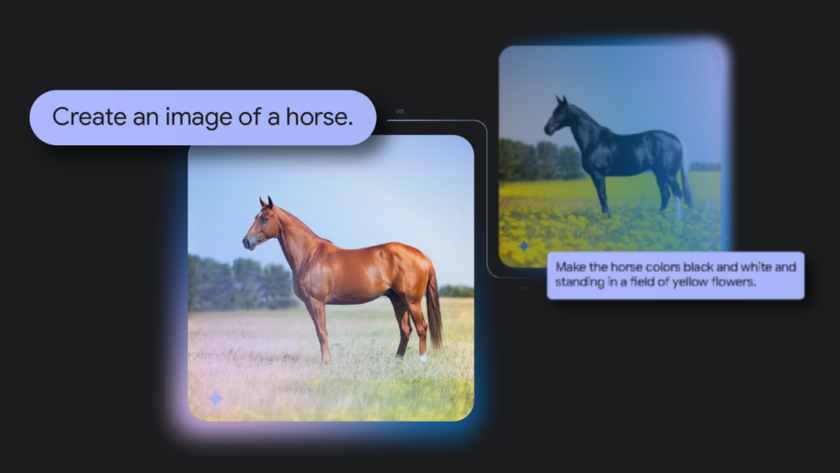
In December we first introduced native image output in Gemini 2.0 Flash to trusted testers. Today, we're making it available for developer experimentation across all regions currently supported by Google AI Studio. You can test this new capability using an experimental version of Gemini 2.0 Flash (gemini-2.0-flash-exp) in Google AI Studio and via the Gemini…
Google DeepMind has shattered conventional boundaries in robotics AI with the unveiling of Gemini Robotics, a suite of models built upon the formidable foundation of Gemini 2.0. This isn’t just an incremental upgrade; it’s a paradigm shift, propelling AI from the digital realm into the tangible world with unprecedented “embodied reasoning” capabilities.
Gemini Robotics: Bridging…
As we have already seen with the basic components (Part 1, Part 2), the Hadoop ecosystem is constantly evolving and being optimized for new applications. As a result, various tools and technologies have developed over time that make Hadoop more powerful and even more widely applicable. As a result, it goes beyond the pure HDFS…